Car Buying Tips That Could Save You Thousands — Tulsa Auto Experts Weigh In
Most people spend more time researching a new phone than they do preparing to buy a car — and it costs them. Not just at signing, but for years afterward.
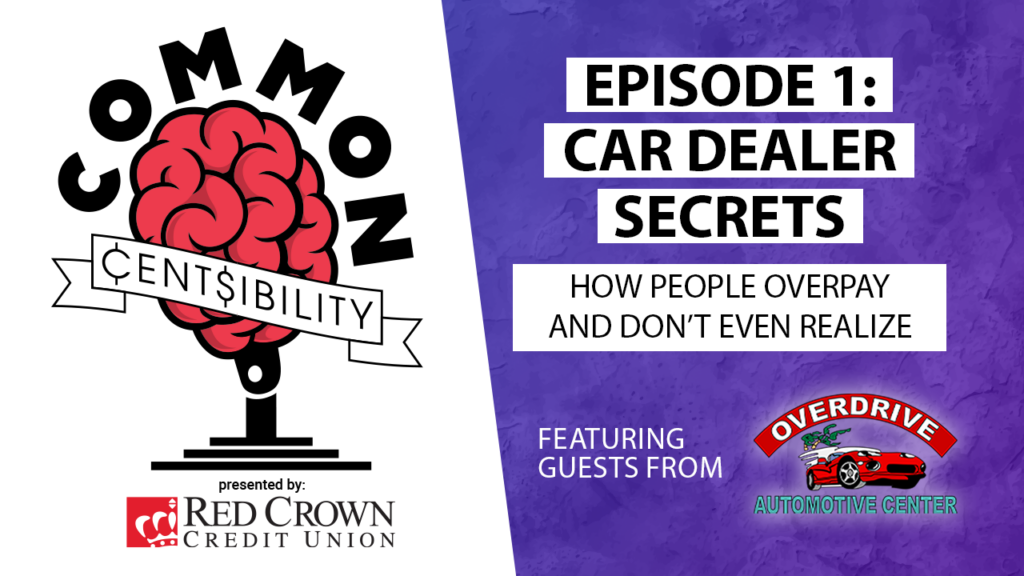
In Episode 1 of Common Centsibility, we sat down with Don Veal and Todd Perkins of Overdrive Automotive Center — a locally owned used car dealership at 4004 S. Memorial Drive in Tulsa that has been serving the community since 1997. Between them, they bring nearly six decades of auto industry experience. What they shared was refreshingly practical: the mistakes buyers make, the add-ons to skip, and the questions you should always ask before signing anything.
Here’s what we took away.
The Biggest Mistake Car Buyers Make Today
According to Don, it comes down to what he calls “the illusion of confusion.” Buyers are overwhelmed by the convenience of online shopping — Carvana, CarGurus, AutoTrader — and end up purchasing emotionally rather than strategically.
“The worst thing you can do is walk into a dealership and say, ‘I’m here to buy a car and I don’t know what I want,'” Don told us. “You’ve got to have an idea of what you’re looking at. Otherwise, they’re going to put you in something that’s most convenient for them.”
The result? Buyers — especially younger ones — are routinely overextending themselves. Don mentioned seeing buyers in their mid-twenties carrying $900-per-month truck payments with no financial cushion for job loss, emergencies, or life changes.
The fix: Do your homework before you ever set foot on a lot.
What to Do Before You Visit Any Dealership
Before you browse inventory, do these four things:
1. Know your real budget — not just your monthly payment. Todd and Don both emphasized that your total vehicle payment (loan + insurance) should not exceed 15% of your monthly take-home income. Run that number honestly before you fall in love with a specific vehicle.
2. Get pre-approved at your credit union or bank first. This is one of the most important steps buyers skip. Knowing your rate and loan amount in advance gives you negotiating power and keeps the conversation focused on price — not payments.
3. Call your insurance agent before you shop. Seriously. Some vehicles that look affordable carry surprisingly high insurance premiums. Don shared the story of buyers who made it all the way to the finance office before discovering their insurance quote was triple what they expected. Get that number early.
4. Know what features matter to you — and stick to them. Two-door or four-door? Car, truck, or SUV? How many passengers? Do you need all-wheel drive? Having honest answers to these questions keeps you from being upsold into a vehicle you didn’t need.
Red Flags in the Finance Office
This is where Don and Todd got into the specifics — and it’s where buyers most often leave money on the table.
Extended warranties on new cars. If you’re buying a new vehicle with a factory warranty and you know you’ll trade it in within four to five years, an extended warranty to 100,000 miles likely isn’t worth the $4,500 price tag. The majority of buyers never reach that mileage before trading in. Todd noted that industry data suggests roughly 90% of buyers trade within four years.
Tire and wheel protection packages. A $1,000 add-on for coverage that replaces something a $50 repair can often fix. Unless you’re in a specific situation where it makes sense, this is a pass.
The down payment conversation. Don was direct: “Down payment equals profit in the car business.” Negotiate the vehicle price first. Don’t reveal your down payment amount or trade-in until you’ve agreed on a purchase price. A trade-in also represents equity — don’t let it get folded into the negotiation before price is settled.
Monthly payment framing. Watch for the conversation shifting entirely to “what can you afford per month?” This framing can obscure a high purchase price or a stretched loan term. Always negotiate price, then financing.
Why Finance Your Car Through a Credit Union?
Don and Todd made a point of telling buyers to get pre-approved at their local bank or credit union before they ever step onto a lot. Here’s why that matters — and why a credit union specifically is worth a call first.
Unlike big banks, credit unions are member-owned and not-for-profit. That structure typically translates to lower interest rates on auto loans, fewer fees, and more flexible underwriting for members who don’t fit a cookie-cutter profile. When you arrive at a dealership already pre-approved, you know your rate, your maximum loan amount, and your monthly payment ceiling — and the entire conversation shifts in your favor.
Don put it plainly during the episode: knowing your financing ahead of time means you’re negotiating the price of the vehicle, not the monthly payment. Those are very different conversations.
Get Pre-Approved for an Auto Loan at Red Crown: redcrowncu.org/auto
How the Used Car Market Has Changed
Post-COVID inflation significantly raised vehicle prices — and many buyers haven’t recalibrated their expectations. As Todd put it, a car that sold for $8,000 a few years ago may now be listed at $10,000-$12,000, but that doesn’t mean its real-world value has kept pace. Buyers should research actual market value, not just sticker price.
Don and Todd also touched on EVs — noting that while they make practical sense for specific use cases (short daily commutes, multi-vehicle households), range limitations and charging infrastructure in the Tulsa area remain real considerations for most buyers today.
A Quick Checklist Before You Sign
Before you finalize any car purchase, run through this list:
- Pre-approved by Red Crown CU or your financial institution
- Monthly payment is 15% or less of take-home income
- Insurance quote obtained for the specific vehicle
- Carfax or AutoCheck reviewed
- Tires inspected (replacement cost factored into your budget)
- Extended warranty and add-ons evaluated individually — not bundled into the payment
- Down payment / trade-in discussed only after price is agreed upon
- Tag, tax, and title costs factored into your total budget
Frequently Asked Questions About Buying a Car
What should I do before visiting a car dealership?
Get pre-approved for an auto loan, know your budget (including insurance), research two or three vehicle models you’re genuinely interested in, and determine which features are non-negotiable. Going in prepared is the single biggest advantage a buyer can have.
Is it better to get financing at the dealership or through a credit union?
Getting pre-approved through a credit union or bank before you shop gives you a rate benchmark. Dealer financing can sometimes be competitive, but you’ll be in a much stronger negotiating position if you already know what rate you qualify for.
What are the biggest red flags when buying a used car?
A salesperson who ignores your stated needs, high-pressure add-ons in the finance office (extended warranties, tire/wheel protection), and a conversation that focuses entirely on monthly payments rather than total price. If the dealership isn’t asking what’s important to you, that’s a signal.
How much should a car payment be relative to my income?
Don Veal recommends keeping your vehicle payment at or below 15% of your monthly take-home income — and that number should include insurance, not just the loan payment.
Should I buy an extended warranty on a used car?
On a new car, the factory warranty covers you for the period most buyers own the vehicle — so extended coverage is often unnecessary. On a used car, a reasonably priced service contract (around $3,000) can provide real peace of mind, especially for mechanical breakdowns. Evaluate it on its own merits, not as a monthly payment bump.
About Our Guests
Don Veal is the manager at Overdrive Automotive Center, with over 39 years in the automotive industry. Todd Perkins is the finance director at Overdrive, with over 27 years at the dealership. Overdrive Automotive Center is located at 4004 S. Memorial Drive, Tulsa, Oklahoma — open Monday-Friday 9am-7:30pm and Saturday 9am-7pm
Ready to Finance Your Next Vehicle?
At Red Crown Credit Union, we’re here to help you get pre-approved before you shop — so you walk into any dealership with confidence and leverage.
Apply for an Auto Loan: redcrowncu.org/auto
Common Centsibility is Red Crown Credit Union’s podcast covering real financial decisions for real Oklahomans. Subscribe on Spotify and never miss an episode.
Listen & Watch: YouTube | Spotify | Subscribe: Common Centsibility